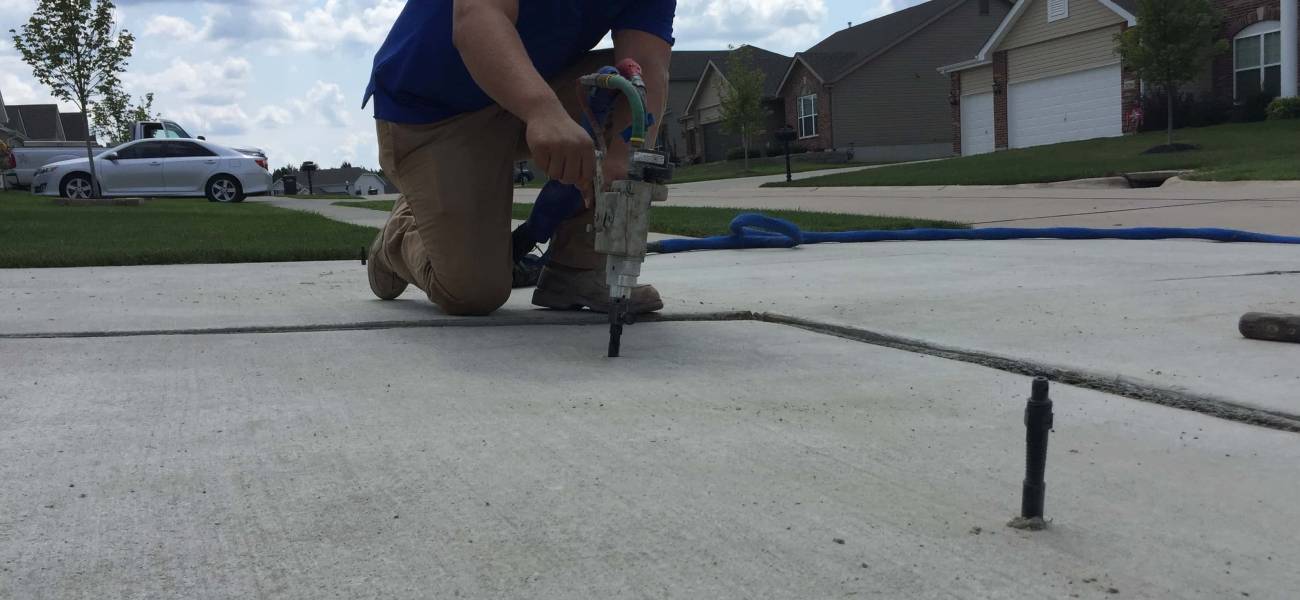
hero background
Mudjacking Technology

History of Mudjacking—Evolution of Concrete Raising Technology

Mudjacking, also called slabjacking, pressure grouting, or polyjacking, has evolved from simple soil-based lifts to advanced polyurethane injection systems. Serving homeowners, property managers, and infrastructure owners, this page explains how mudjacking started, how it developed, and why it remains a trusted method for concrete lifting and leveling in New England and beyond.

Origins of Mudjacking — How Concrete Raising Began

Mudjacking began in the early 20th century as a practical technique to lift sunken concrete slabs without full removal and replacement. Initially, contractors used a mixture of soil, sand, and water — a “mud-like” slurry — pumped under settled concrete to fill gaps and raise the slab back to grade. This early form of slabjacking provided a faster, cleaner, and more economical alternative to demolition.

Over time, improvements in materials and equipment transformed the method into a more precise and dependable technology. Today’s mudjacking includes a range of materials from traditional cementitious grouts to cutting-edge expanding polyurethane foams.

Concrete Repair Without Replacement

Mudjacking revolutionized concrete repair by offering a solution that restored level surfaces with less cost, disruption, and environmental impact than tearing up and repouring entire slabs.
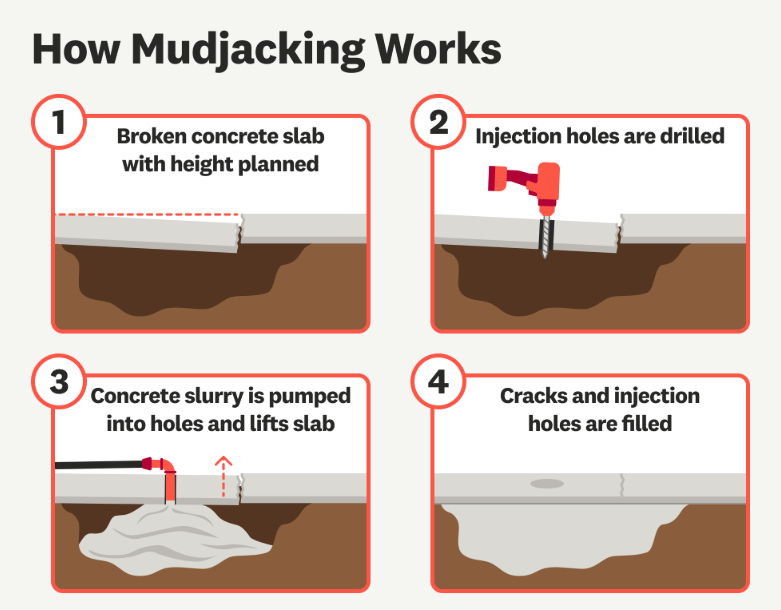
Evolution of Concrete Lifting Technology

Early Soil & Sand Slurry Pumps (1900s)

In its earliest forms, mudjacking used simple soil/sand slurries pumped through holes beneath a slab. This method filled voids and lifted concrete but lacked strength and precision for heavy loads.

Cementitious Grout Era (Mid 1900s)

As construction demands grew, mudjacking materials evolved to cement-based grouts that were stronger and stiffer than soil slurries. These mixtures improved load-bearing capacity and became standard in commercial and industrial lifting projects.

Modern Polyurethane & Foam Injection (Late 1900s–Present)

The introduction of expanding polyurethane foams marked a major leap forward. These foams are lightweight, high-strength, and highly controlled — able to expand up to many times their injected volume to fill voids completely and lift slabs precisely. This modern technology is often referred to as polyjacking.

How Mudjacking Has Improved Over the Years

Greater Load-Bearing Performance

Modern materials such as engineered Portland cement grouts and polyurethane foams support heavier loads and resist washout better than early soil slurries.

Improved Precision & Control

Portable pumps and specialized injection tools allow crews to monitor lift elevation precisely — something earlier slurry systems could not reliably do.

Faster Curing & Return to Service

Today’s polyurethane and cementitious grouts cure faster than old soil mixtures, allowing surfaces to be used again quickly, even in high-traffic zones.

Reduced Environmental Impact

Modern methods require less excavation, produce less waste, and often reduce landfill materials versus full slab replacement — aligning with sustainable construction practices.